

Are Cows The Only Animals With Four Stomachs
Every so frequently some of my non-farming relatives visit my family unit's dairy farm. My younger cousins always insist on seeing the cows. Last time they visited, 1 of them asked if cows actually take four stomachs?
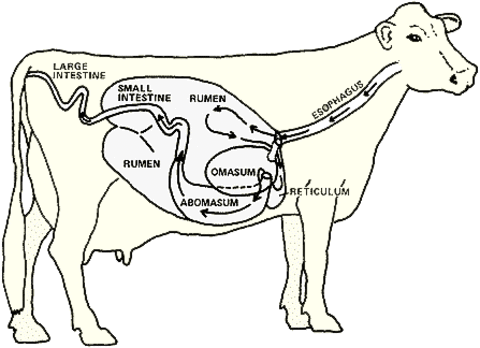
Information technology's a pretty common misconception that cows have four stomachs. Their digestive beefcake is rather complicated. Anyone who has e'er taken a ruminant animate being nutrition course can attest to this. Cows and other ruminants (sheep, goats, deer, bison, etc.) take one stomach with four compartments: the rumen, reticulum, omasum, and abomasum.
WHAT ARE RUMINANTS?
In that location are many different types of animal digestive systems. Ruminants are hoofed herbivorous mammals that larn the nutrients from their feed by fermenting information technology in a special stomach compartment, called the rumen. This allows them to assimilate fibrous plants, such as grasses and legumes. Ruminants are sometimes called foregut fermenters because they ferment their feed before the nutrients are absorbed in the small intestine.
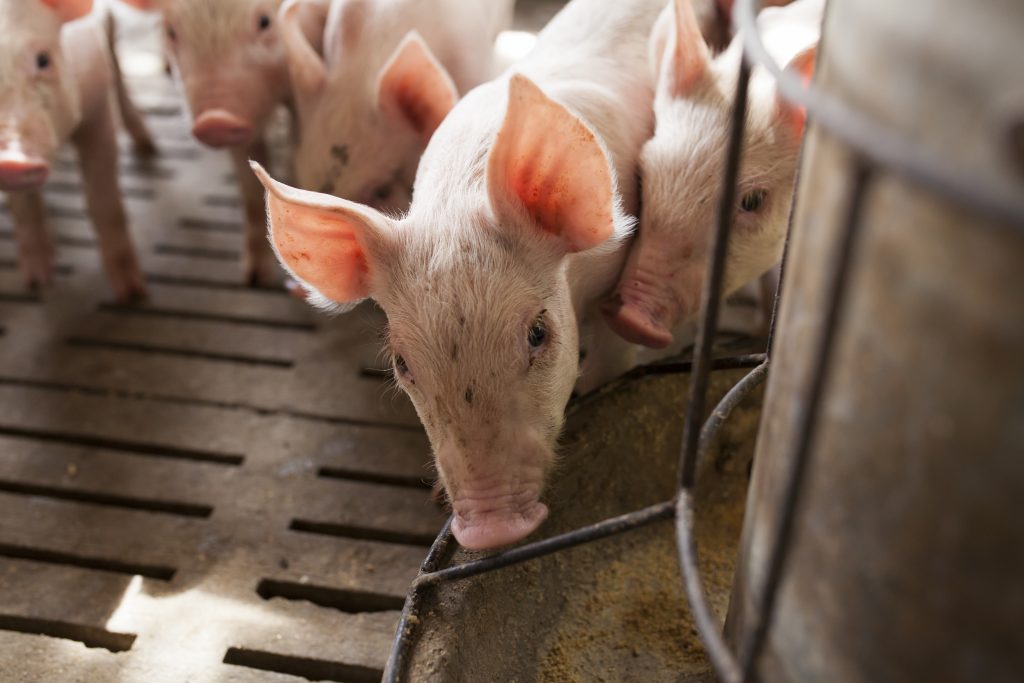
Always wonder why we can't assimilate grass? That's considering we have a monogastric (single-chambered tum) system, similar to pigs, cats, and dogs. This unmarried stomach uses acid to suspension down food. This doesn't work very well at taking the nutrients out of fibrous plants. Monogastric animals are very skilful at eating feed that is high in energy and low in cobweb.
Pseudo-ruminants such as horses and rabbits only have i stomach compartment simply are still able to digest lots of fibrous plants. They're chosen hindgut fermenters, because they ferment their feed after the pocket-sized intestine in a pouch called the cecum, just off of the large intestine. They can only absorb a few nutrients, because they ferment their feed after the small intestine.
RUMEN
The largest stomach compartment of a moo-cow is the rumen. Did you know information technology can hold 25 gallons or more of food? It's a behemothic fermentation vat! The microbes in the rumen digest via fermentation the feed that the animal eats. They intermission downwards fibrous plants to be absorbed by the lining of the rumen. This allows ruminants to upcycle nutrients in feedstuff that nosotros cannot!
Brute nutritionists blueprint the diets of animals to maximize the health, welfare, and performance of the animals. They contain by-products from other industries that would otherwise go to waste, such as almond hulls, cotton fiber seeds, brewers' grains, distillers' grains, citrus pulp, and so much more! Ruminants can upgrade these otherwise wasted resource in high-quality meat, milk, and fiber. This helps to enhance the sustainability of ruminant agriculture.
RETICULUM
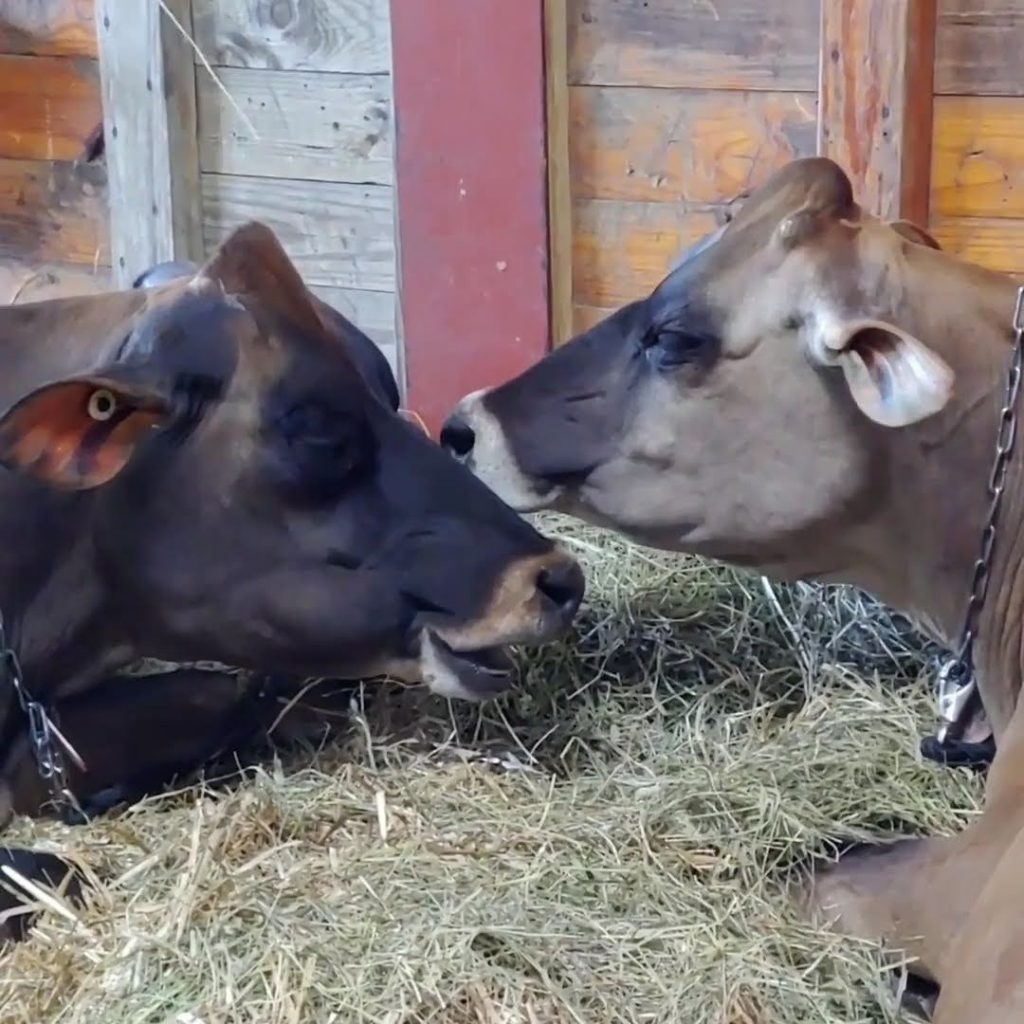
The reticulum is a small pouch connected to the rumen. The inside has a honeycomb-like structure, which traps heavy feed particles for further digestion. The cud, a small bolus of partially digested feed, is formed hither and in the rumen. When cows swallow their feed initially, they simply soften it. The rumen breaks it down further and then they regurgitate it to further chew information technology earlier swallowing it once more. Cud chewing is a sign that a cow is getting enough fiber and is good for you and relaxed, then we're always on the lookout for it. Some farms even use sensors to measure this!
The reticulum is located right next to the center. Heavy feed particles are trapped in that location, but if a cow eats a piece of metallic, it tin can go trapped hither as well. If it punctures the lining information technology tin can crusade a astringent infection, called Hardware disease. We prevent this by existence super conscientious when harvesting feed. Lots of harvesting equipment comes with metallic detectors too. We can also requite the cows magnets to reduce the run a risk. This is ane of the reasons why it's super important that people don't litter, especially nigh agricultural fields and pastures.
OMASUM AND ABOMASUM
The next stomach compartment, the omasum, is earth-shaped with layers of tissue that looks similar a book with lots of pages or a pile of towels. Similar to towels, it absorbs water and other nutrients from the feed. In that location's still more to learn, and ruminant diet is an expanse of ongoing innovation and enquiry!
The concluding stomach compartment is the abomasum, or "truthful tummy." The abomasum is like our stomach and that of other monogastrics. It has glands that secrete acids and enzymes to digest feed. Adjacent comes the small-scale intestine, which absorbs more nutrients. After that is the large intestine, which primarily absorbs h2o and and so forms manure. This manure is a natural fertilizer to attend crops to feed animals and people, which completes the cycle all over over again!
FARMERS KNOW Best
As farmers, nosotros have to know a lot about the science behind our cows in order to ensure they are happy and healthy. We take practiced care of them. It's not just about science, although I'm a total science geek. It's about the family. Dairy farming is my family's life and livelihood. Information technology connects united states all together, even my non-farming relatives enjoy learning virtually our farm. When in doubt, ask a farmer. You lot might acquire some absurd stuff to tell your friends and family.
All posts are the opinion of the writer and do not necessarily represent the view of the Animal Ag Brotherhood .
Source: https://animalagalliance.org/do-cows-really-have-four-stomachs/
Posted by: ludwiglikeriatues.blogspot.com
0 Response to "Are Cows The Only Animals With Four Stomachs"
Post a Comment